The Viral AI Landmark Flag Trend — And How Travel Creators Can Own It
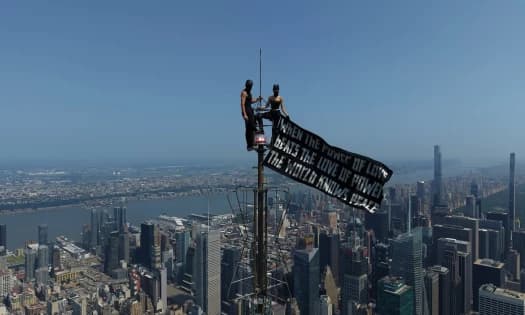
Scroll through Reels, Shorts, or X this week and you'll hit it: two anonymous figures balanced on the antenna spire of a New York skyscraper, wind ripping across a giant black flag with custom text stretched between them. A helicopter carves an arc behind the tower. It looks like leaked documentary footage. It's entirely AI.
The stunt isn't shot on a drone. It's built from two prompts — one that generates a hyper-real still image, and one that animates it into cinematic motion. No rigging, no permits, no editing suite. That's the whole reason it's spreading.
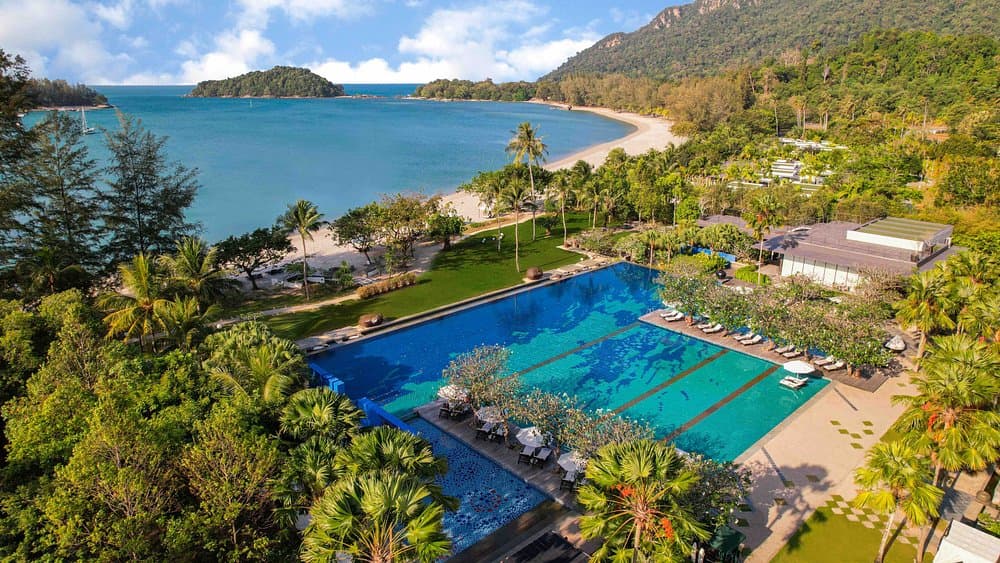
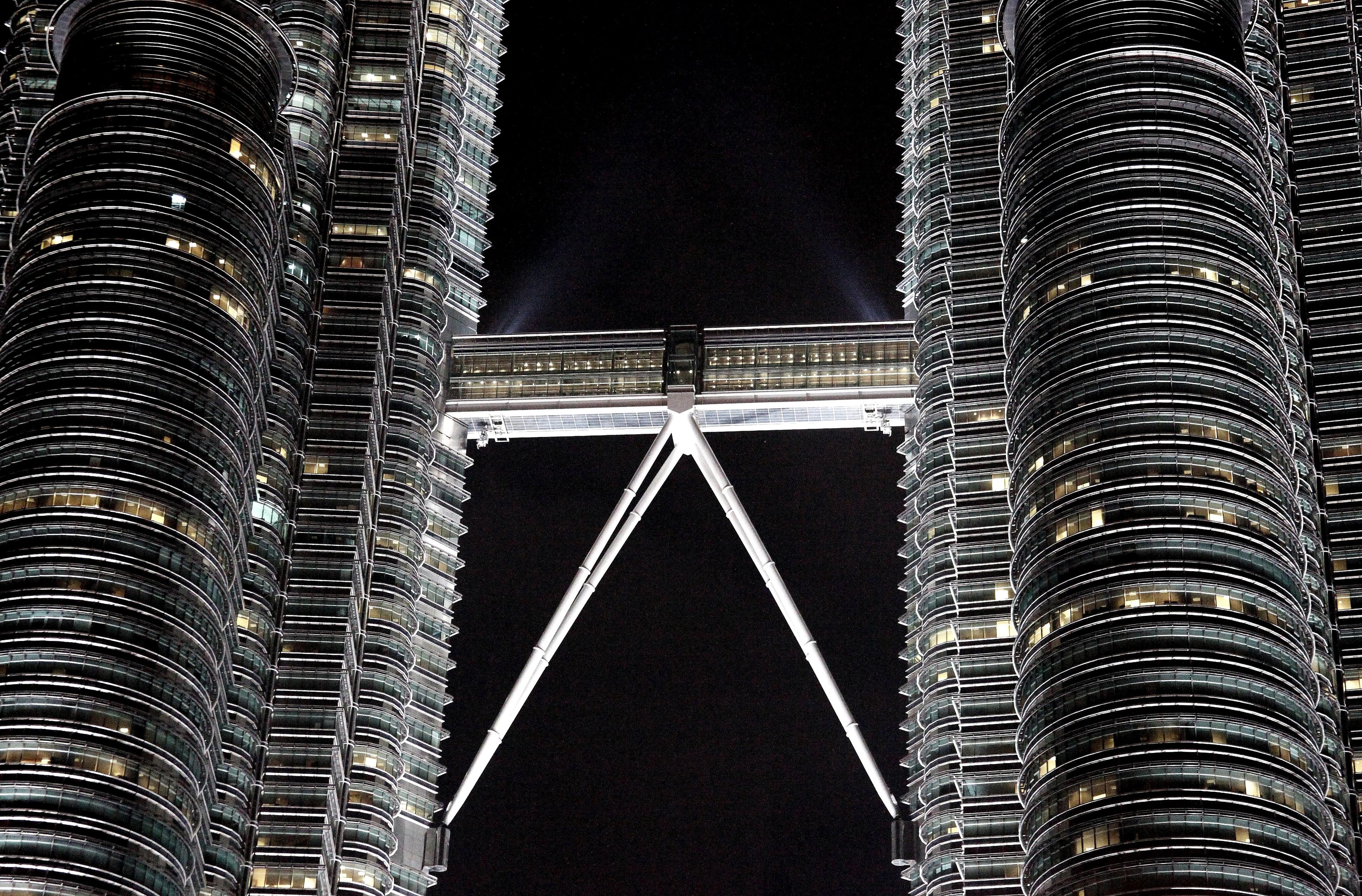
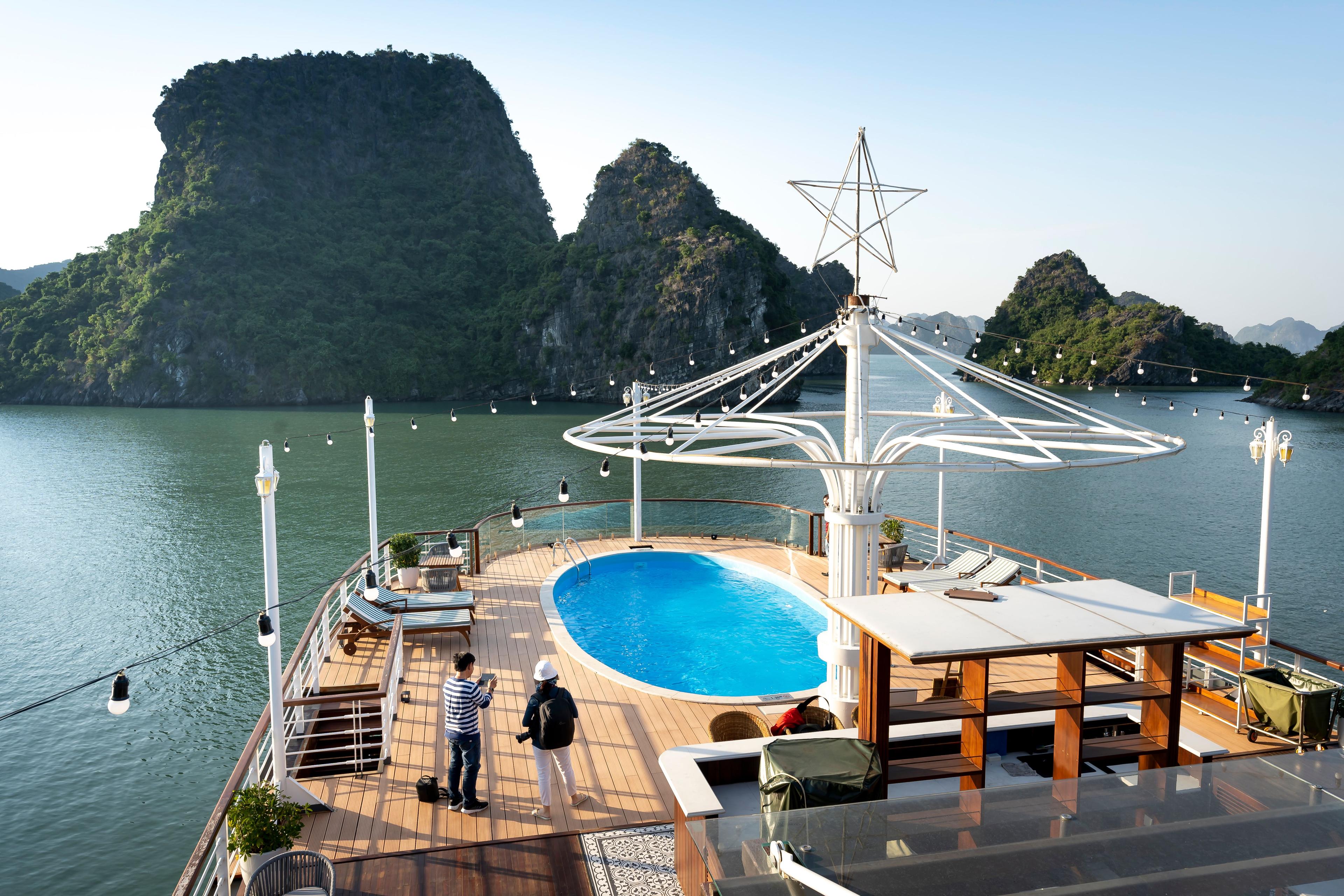
For travel creators, this is not just a novelty to gawk at. It's a distribution format sitting in the open. The same technique that puts a flag on the Empire State Building can put your destination, your offer, your booking hook on any landmark on earth — Marina Bay Sands, the Petronas Towers, a Ha Long Bay karst, the Burj Khalifa. Below is how the trend works, and how to repurpose it for travel content instead of generic clout.
The real story behind it
 Before this became a two-prompt AI trick, it was a real, very risky stunt.
On July 1, 2026, Russian daredevils Angela Nikolau and Ivan Beerkus (legal name Ivan Kuznetsov) — known online as "the Skywalkers" from their 2024 Netflix documentary Skywalkers: A Love Story — free-climbed the Empire State Building without ropes or safety gear. They made it past the 103rd floor, an area closed to the public and used for water tower maintenance, through a hatch, and up to the transmission tower more than 1,450 feet above the street.
At the top, they unfurled a black flag reading "When the power of love beats the love of power, the world knows peace," and Kuznetsov got down on one knee and proposed. Photos show Nikolau holding up her ring with the Manhattan skyline behind her.
Getting them down wasn't simple. The antenna they'd climbed emits high-frequency radio signals strong enough to be harmful, so the building had to power it down before an NYPD Emergency Services team could climb roughly 1,250 feet to reach the couple — a process that took about 30 minutes. Both were arrested and charged with burglary, reckless endangerment, criminal mischief, criminal trespass, and several related counts. They pleaded not guilty and were released under supervision, with their next court date set for August 24. It wasn't their first climb either — the pair has scaled skyscrapers like Malaysia's Merdeka 118 Tower before, and had been in trouble just days earlier for a similar stunt in China.
That real footage and the real proposal are what the internet latched onto first. The AI flag videos came right behind it — creators recreating the spectacle of "someone at the top of a skyscraper with a giant banner" without the felony charges, the antenna radiation risk, or the actual climb. It's a strange but familiar pattern: a genuinely dangerous, headline-making act gets turned into a safe, repeatable content format within days, because the visual language of the moment (banner, height, skyline, drama) is what people remember — not the legal risk behind it.
Worth knowing if you're posting one of these: viewers may connect your AI clip to the real story whether you mention it or not. A quick nod to "inspired by the real Empire State Building climb, recreated with AI" reads as informed rather than derivative — and quietly distances your content from anyone trying to actually recreate the stunt.
Why this trend actually works
Three things make these clips stop thumbs:
- Impossible perspective. Humans aren't supposed to be up there. The brain flags the danger before it questions the realism.
- A readable message. The flag carries text. Unlike most AI slop, there's a payload — a brand, a quote, a call to action — riding the spectacle.
- Documentary styling. Telephoto compression, haze, film grain, and a "Reuters-style" look trick the eye into reading it as real footage, not a render.
That combination — danger, message, believability — is exactly what a travel offer needs to survive the feed. You're not selling a render. You're selling a place, and the place is the spectacle.
The two-step workflow, translated for travel
The mechanic is simple and worth understanding before you touch prompts:
- Prompt one builds a still. You describe a hyper-real photograph with strict camera specs (a specific body, a long telephoto lens, an aperture, an ISO) so the model leans toward photographic realism instead of illustration. You leave a placeholder for the flag text.
- Prompt two animates that still. You feed the image into a video model and instruct it to preserve the composition while adding motion — wind, a circling aircraft, a slow orbit, natural camera shake. The trick is telling it to keep everything and only add movement, so the text stays legible and the scene doesn't mutate.
Everything downstream — the drama, the wind, the "is this real?" reaction — comes from those two instructions being specific.
A travel-first image prompt (swap the landmark and message)
Here's an original prompt structured the same way, but aimed at destination marketing rather than a generic stunt. Replace the bracketed fields:
Ultra-realistic telephoto documentary photograph. A traveler in a light linen outfit stands on a high viewing platform of [LANDMARK, e.g. Marina Bay Sands, Singapore], holding one edge of a large fabric banner that waves dramatically in the wind.

The banner is the main focus and features large bold white uppercase sans-serif typography reading:

[YOUR MESSAGE, e.g. SINGAPORE FROM ₹49,999]

The text is perfectly centered, highly legible, professionally printed, and fills most of the banner surface.

Background shows the recognizable [CITY] skyline at golden hour, compressed by a long telephoto lens, layered high-rises, gentle atmospheric haze, warm cinematic light, muted realistic colors.

The banner is stretched naturally by strong wind with realistic fabric folds and motion. Strong sense of height and scale, but the traveler looks confident and safe.

Composition: vertical portrait 9:16, subject near upper third, banner extending toward the right, background softly compressed with atmospheric perspective.

Style: hyper-realistic, documentary, editorial, RAW photo quality, HDR, sharp focus on subject and banner, subtle film grain.

Camera: Sony A1, 400mm telephoto lens, f/5.6, ISO 200, 1/2000s, 8K.

Negative prompt: cartoon, anime, CGI, illustration, painting, extra people, blurry, low resolution, watermark, oversaturated colors, distorted anatomy, bad hands, cropped banner, unreadable text, artifacts.
Two things to keep tight: the camera block (it forces realism) and the negative prompt (it kills the tells that scream "AI" — bad hands, warped text, cartoon shading).
The animation prompt
Once the still looks right, animate it. The single most important instruction is preserve, then add motion:
Create a realistic cinematic 9:16 vertical video from this image, set at [LANDMARK, CITY]. Keep the same skyline background, the same platform, the same person, and the same banner with the text clearly visible. It should look like real drone footage, not CGI.

Add: strong natural wind so the banner waves harder with authentic fabric folds; the person reacting slightly to the wind with clothes moving naturally; a slow cinematic push-in that smoothly orbits the platform in a parallax motion.

Camera should feel like a professional drone — stable but with slight natural vibration. Keep the banner as the main focus and the text fully readable as the fabric moves.

Natural golden-hour daylight, premium cinematic tone, slight haze between buildings, realistic shadows, telephoto compression, real-world physics. No cartoon style, no over-animation, no extra people, no text changes, no distorted banner text, no camera cuts.
Where the real leverage is
Anyone can put "FOLLOW FOR MORE" on a flag. The travel angle is sharper because the message can do a job:
- Route + price drop. "BALI · 5N · ₹38,999" on a banner over Uluwatu cliffs. The spectacle earns the view; the number earns the DM.
- Objection-killer. "VISA-FREE FOR INDIANS" over the Thai skyline answers the first question every traveler has.
- Destination reveal. No price, no text — just your face on a landmark most followers haven't been to, captioned with the hook.
- Seasonal urgency. "MONSOON RATES END SUNDAY" carries scarcity the algorithm loves.
The format gives you a stop, the banner gives you the message, the caption gives you the conversion. That's a full funnel in nine seconds of vertical video.
A few honest caveats
- Disclose it's AI where it matters. Passing off a render as a real photo of your trip erodes trust fast, and some platforms now require labeling synthetic media. A light "AI-made 👀" in the caption keeps you clean and often increases engagement, because the "how'd you do that" comments do their own reach.
- Don't fake safety stunts you'd never endorse. The rooftop-danger version travels well as spectacle, but a travel brand selling real trips is better off with confident-but-safe framing than "person dangling off a spire."
- Landmark likeness and logos. Keep banners to your own text and brand. Avoid slapping real third-party logos or trademarks onto AI landmark footage.
The takeaway
The Empire State flag clip is proof that cinematic, feed-stopping video no longer needs a crew or a budget — just two well-written prompts. For travel, that's not a gimmick, it's an unfair advantage: the world's most photogenic places, on demand, carrying your offer. Swap the landmark, swap the message, and let the spectacle do the marketing.
Crafted Vacays
Travel stories & guides for the modern Indian traveler.