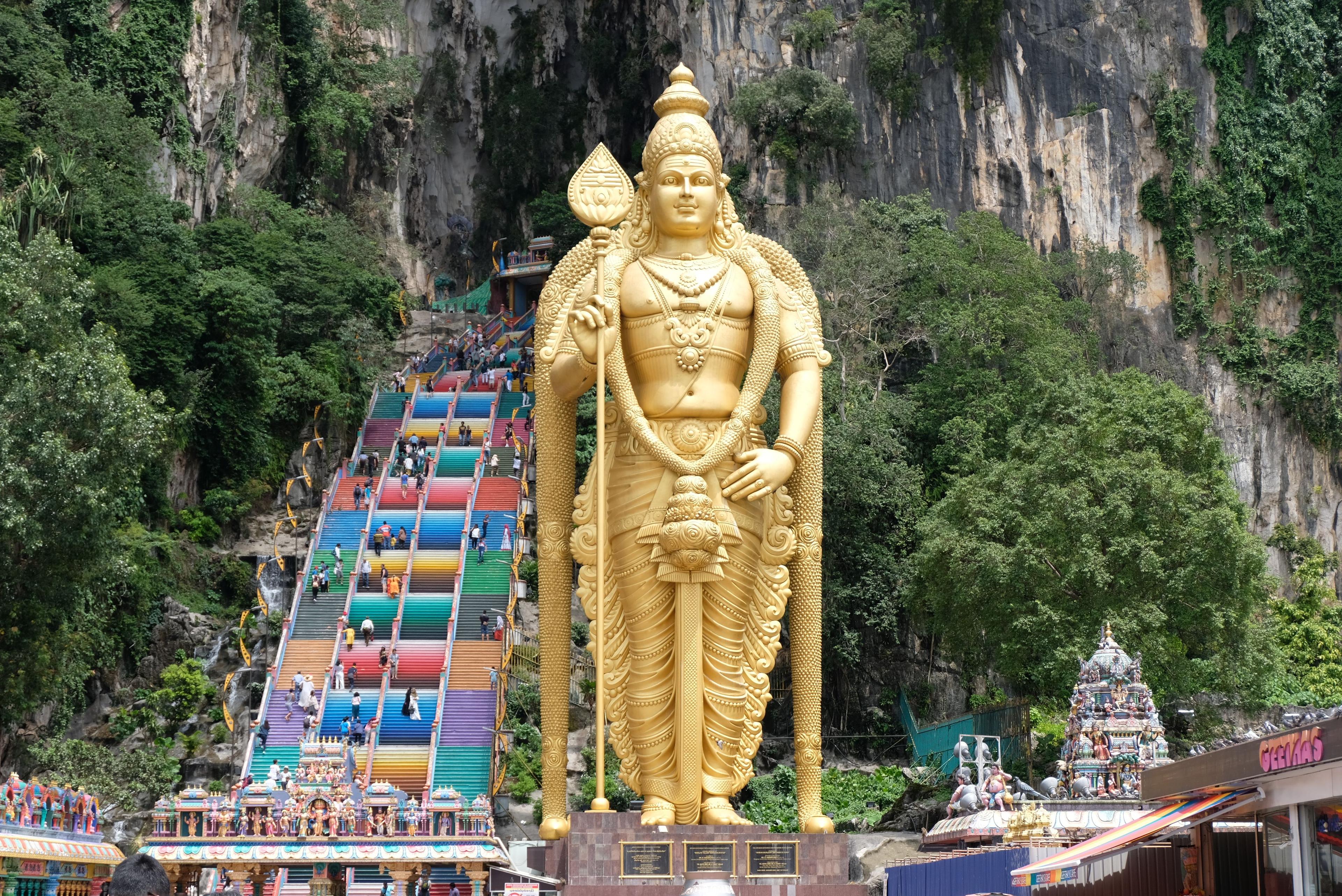
| Quick Facts | |
|---|---|
| Visa requirement | Visa-free for Indian passport holders · No application needed |
| Maximum stay | 30 days per visit (tourism only) |
| Policy valid until | 31 December 2026 |
| MDAC | Mandatory · Free · Online · Must file within 3 days before arrival |
| Flight from India | 238+ weekly flights from 14 Indian cities · ₹8,000–₹22,000 return |
| Currency | Malaysian Ringgit (MYR) · ₹1 ≈ MYR 0.055 |
| Best season | November – March (west coast dry season) |
| Ideal duration | 6 – 8 nights |
What the Visa-Free Policy Actually Means
Malaysia extended its visa-free access for Indian nationals through 31 December 2026 as part of the Visit Malaysia Year 2026 campaign — the country's biggest tourism push in decades. Indian passport holders can enter Malaysia for up to 30 days per visit, for tourism, social visits, or transit. No visa sticker. No embassy appointment. No application fee.
Multiple entries are allowed before the December 31, 2026 deadline — so if you travel to Malaysia twice this year, both trips qualify under the same exemption, as long as each stay does not exceed 30 consecutive days.
Malaysia has never been this easy to enter for Indian travelers. The 30-day visa-free window, combined with 238 weekly direct flights from 14 Indian cities, makes it genuinely one of the most accessible international holidays you can book right now.
What the policy does not cover: employment of any kind, internships, studying, or extending your stay beyond 30 days within Malaysia. If you need more time, you must exit the country — a short trip to Singapore or Thailand resets the clock — and re-enter under the same exemption, subject to the same entry conditions.
The MDAC — The Step Everyone Misses
The MDAC takes five minutes to fill. Skipping it can cost you your trip.
Here is where most Indian travelers slip up. The Malaysia Digital Arrival Card — MDAC — has been mandatory for all foreign nationals arriving in Malaysia since January 2024. It is not the same as a visa. It is a digital immigration declaration form, the online replacement for the old paper disembarkation card you used to fill on the plane.
Filing it is free. Takes five minutes. Must be done at least three days before your arrival date at the official immigration portal: imigresen-online.imi.gov.my/mdac
💡 Insider Tip — The MDAC window opens exactly 72 hours before your arrival. Set a calendar reminder three days before your flight. File it then, save the confirmation screen as a screenshot, and have it ready to show at immigration alongside your passport.
What the MDAC asks for: your passport details, travel dates, accommodation address in Malaysia, the purpose of your visit, and a health declaration. It takes around five minutes. Once submitted, you receive a confirmation with a reference number — this is what immigration officers check.
Common mistakes Indian travelers make with the MDAC:
- Filing it too early (more than 72 hours before arrival) — the system rejects submissions outside the window
- Filing it for the wrong arrival date (especially common on red-eye flights that cross midnight)
- Using a third-party website that charges a fee — the MDAC is completely free through the official portal; any site asking for money is not the real one
- Not saving the confirmation — immigration officers will ask for it
The Three Documents You Must Carry (Non-Negotiable)
Visa-free entry is conditional on passing immigration screening. The officer at the counter has full authority to deny entry regardless of the visa-free policy — and they do exercise that authority. These are the documents that determine whether you walk through or get escorted to a holding room:
1. Valid Indian Passport
Must be valid for at least six months beyond your intended departure date from Malaysia. A passport expiring in five months is technically invalid for this trip, even if your stay is only ten days. Check this before booking flights.
2. Return or Onward Ticket
A confirmed return flight to India — or an onward ticket to a third country — is required. A one-way ticket is a red flag at the immigration counter. Officers interpret it as potential overstay risk. Print this or have it clearly accessible on your phone.
3. Proof of Accommodation and Funds
Hotel booking confirmations (not just a search screenshot — a confirmed reservation with booking reference) and evidence of sufficient funds. Malaysian immigration guidelines suggest approximately MYR 1,500 (around ₹27,000) per visitor as the benchmark for "sufficient funds." This can be a bank statement, a credit card statement, or cash. Travelers who cannot demonstrate they can afford their stay are among the most common "Not to Land" cases.
💡 Insider Tip — Print everything. Digital copies are accepted, but if your phone dies at immigration or your internet is slow, paper is your backup. Carry a small folder: passport, return ticket, hotel confirmations, and the MDAC confirmation. Immigration queues at KLIA move fast — being ready matters.
What "Not to Land" Actually Means — And How It Happens
"Not to Land" — NTL — is the formal designation Malaysian immigration uses when a traveler is refused entry at the border. It goes on your travel record. Depending on circumstances, it can complicate future visa applications across multiple countries.
NTL cases involving Indian travelers at KLIA have been documented and reported, particularly in early 2025. The common triggers:
Incomplete documentation — missing the MDAC confirmation, no return ticket, no hotel booking, or a passport with less than six months validity.
Inconsistent answers during interview — immigration officers sometimes conduct short verbal interviews, especially for first-time visitors. If your stated purpose of visit, your accommodation, and your travel history do not align, it raises a flag.
Suspicious travel history — previous overstays in any country, or a pattern of very frequent short-duration international travel, can trigger additional scrutiny even for travelers with all their documents in order.
Flagged passport history — this is rare but real. If your passport has been flagged in any immigration system for prior violations, the visa-free policy does not override the flag.
Intent to work — travelers who appear to be visiting for work (freelancers, content creators, business consultants) without the appropriate visa category can be questioned and refused entry if immigration suspects undeclared employment activity.
The visa-free policy removes the paperwork burden. It does not remove the immigration officer's discretion. Coming prepared is not just good advice — it is the difference between a holiday and a flight back home.
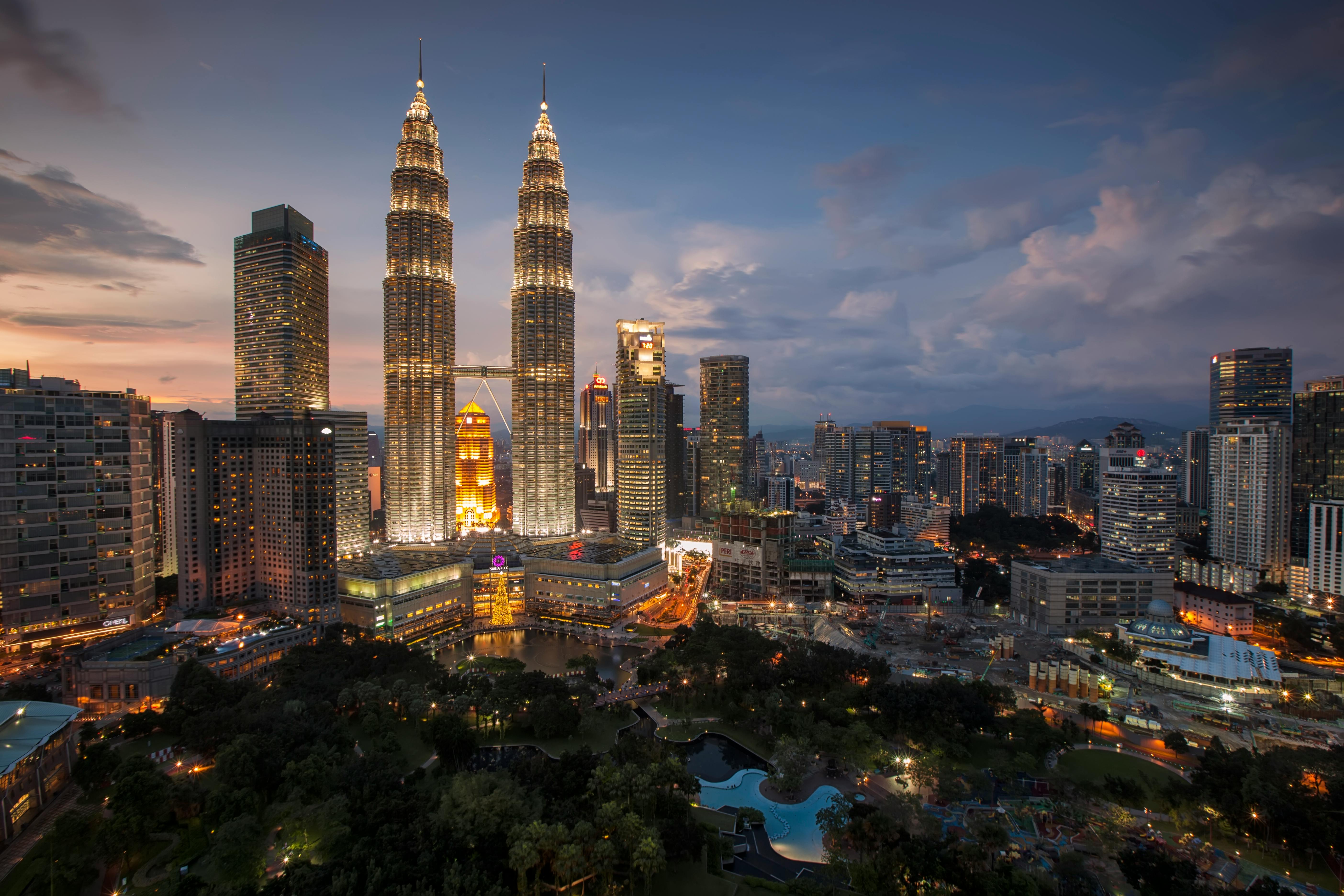 Kuala Lumpur awaits — but the entry process requires preparation, not assumption.
The 30-Day Limit — What You Can and Cannot Do
The 30-day visa-free stay is counted from the stamp date on your passport at arrival immigration. Day one is the day you land. Day thirty is the last day you must leave.
You cannot extend your stay within Malaysia under the visa-free exemption. The Immigration Department of Malaysia does not grant extensions for tourist visa-free entries. If you need more time, the correct approach is to exit Malaysia — the most common option is a short trip to Singapore (45 minutes by bus from Johor Bahru) — and re-enter. Each re-entry is treated as a fresh 30-day visit, subject to the same entry conditions being met again.
You cannot work under the tourism exemption. This explicitly includes freelance work, remote work for overseas clients conducted from Malaysian soil, brand partnerships executed while in Malaysia, or any activity for which you receive income. If you are a digital nomad planning an extended working stay, you need the Malaysia Digital Nomad Pass — a separate application process entirely.
💡 Insider Tip — If you are combining Malaysia with Singapore, book your return ticket from Singapore rather than Kuala Lumpur. It gives you flexibility to spend your last 2–3 days in Singapore without being rushed, and it clearly shows Malaysian immigration you have an onward destination — which helps at entry.
How Crafted Vacays Handles This for You
Every Malaysia package Crafted Vacays puts together includes a pre-travel documentation checklist specific to your travel dates, MDAC filing reminders with the exact window and direct link, hotel confirmation letters formatted to Malaysian immigration standards, and a 24-hour support line for anything that comes up at the airport.
The visa-free policy has made Malaysia dramatically easier to book. What it has not done is made the entry process something you can walk into without preparation. The travelers who get turned back are almost never unprepared by choice — they simply did not know there were three layers to this, not one.
📲 Planning a Malaysia Trip? Let Crafted Vacays handle the documentation checklist, MDAC filing reminder, and full itinerary — so you land at KLIA ready for the holiday, not the holding room. [Get your free Malaysia itinerary →](https://wa.me/919234835704?text=I want to enquire about Malaysia package)
The Visit Malaysia 2026 Advantage — Why Right Now Is the Best Time to Go
The visa-free window runs until 31 December 2026, and Malaysia has tied it to the Visit Malaysia Year 2026 campaign — the country's most ambitious tourism drive, targeting 47 million international visitors. For Indian travelers, this means better hotel pricing (demand is up, but so is inventory), year-round cultural events, expanded direct flight routes from Indian cities including new connections from Tier-2 cities like Coimbatore, Visakhapatnam, and Ahmedabad, and a general infrastructure uplift across KLIA, Langkawi, and Penang airports.
Indian arrivals hit 1.56 million in 2025. Malaysia is targeting 2.1 million from India by the end of 2026 — a 34.6% jump. The airline capacity is there (238 weekly flights from 14 Indian cities, with fares starting as low as ₹8,700 one way). The only variable left is whether Indian travelers know how to enter correctly.
Now you do.
Visa-free is not visa-automatic. It is visa-easy — for the traveler who reads the fine print.
Crafted Vacays
Travel stories & guides for the modern Indian traveler.