| Quick Facts | |
|---|---|
| Visa | Visa on Arrival (VoA) · IDR 500,000 (≈ ₹2,700) + Love Bali tourist levy IDR 150,000 (≈ ₹800) |
| Flight from India | Mumbai/Delhi to Denpasar (DPS) · Direct & 1-stop · ₹18,000–₹30,000 return |
| Currency | Indonesian Rupiah (IDR) · ₹1 ≈ IDR 185 |
| Best season | April – October (dry season) |
| Daily budget | ₹3,500 – ₹8,000 (mid-range, all in) |
| Ideal duration | 6 – 8 nights |
The Short Answer — Before We Go Deeper
Here is the honest one-line version: Ubud is for the soul. Seminyak is for the senses. Uluwatu is for the view.
Now the longer version — because the right answer depends entirely on who you are travelling with, what you came for, and whether you are the type who prefers a rice field or a rooftop.
Ubud — Bali's Cultural Heart (and India's Spiritual Twin)
Ubud is the part of Bali that feels like someone took Rishikesh, gave it better food, and surrounded it with rice terraces.
Ubud sits in the highlands, about 25 kilometres north of Kuta. It is quieter, greener, and cooler than the coast — usually 3–5°C lower than Seminyak. For Indian travelers, there is an immediate familiarity: Hindu temples on every corner, incense burning at dawn, offerings placed on the ground each morning, and a general reverence for something older and slower than the beach scene down south.
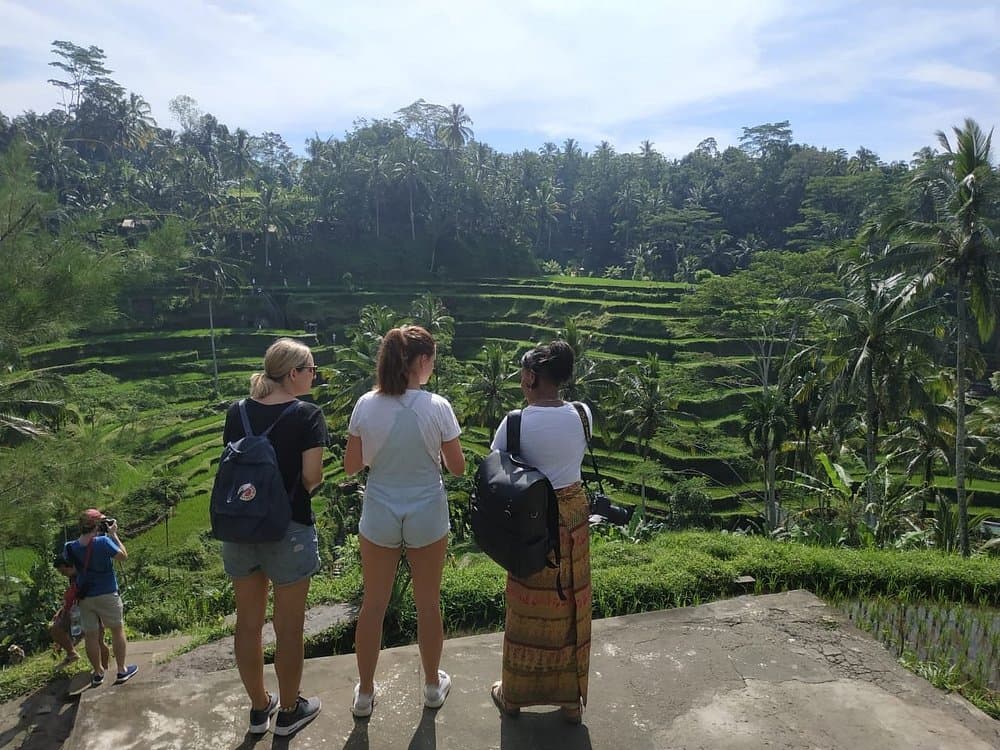
The Tegallalang Rice Terraces are the headline attraction, but Ubud's real appeal is cumulative. Morning walks past silver workshops and organic cafés. Afternoon visits to the Ubud Art Market for batik and carved wood. Evening Kecak fire dance performances at Pura Uluwatu or Pura Dalem Taman Kaja — performances that will genuinely move you if you sit in the front row.

Tegallalang Rice Terraces — the image that made Ubud famous. Go at 7 AM before the tour groups arrive.
💡 Insider Tip — Skip the "Instagram swing" at Tegallalang unless you enjoy queuing for 45 minutes for a 10-second photo. Instead, walk down into the valley floor where the light hits the terraces from below — better photos, zero queue.
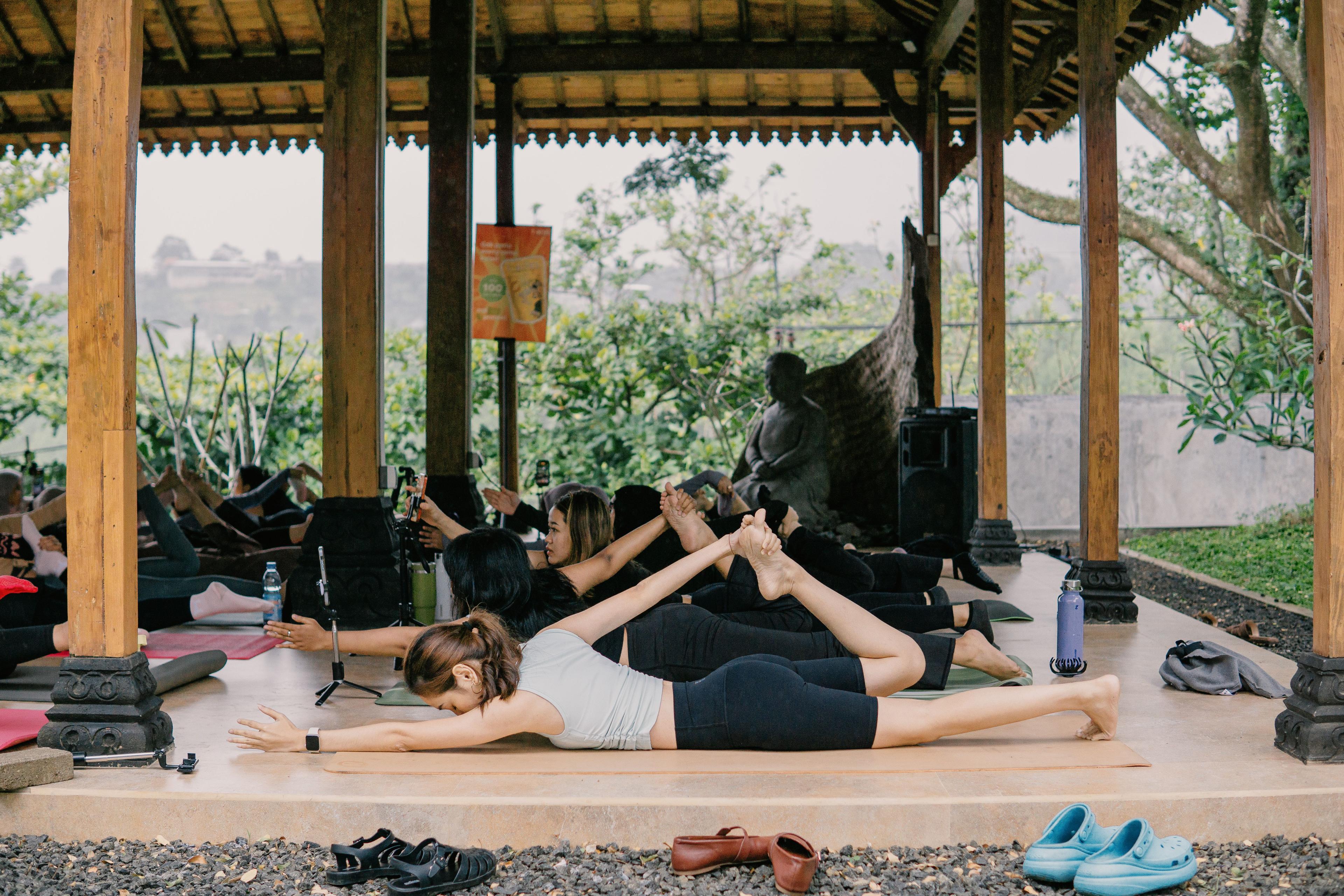
Ubud is best for: First-timers who want to understand Bali before they beach it. Couples on a spiritual or wellness break. Indian families who want to explain Hinduism to their kids through a living, breathing temple culture. Yoga retreat-goers (Ubud has more yoga shalas per square kilometre than anywhere outside of India). Solo women travelers — Ubud is exceptionally safe and walkable.
Ubud watch-outs: It is not a beach destination. The nearest decent beach (Sanur) is an hour away. The famous Sacred Monkey Forest is genuinely chaotic — keep food out of sight, bags zipped, and glasses off if you can manage it. Road access to Ubud can be slow; build buffer time for temple visits.
Where to eat (Ubud): Locavore (fine dining, book weeks ahead), Warung Babi Guling Ibu Oka for the famous suckling pig if you eat pork, and Sayuri Healing Food for Indian vegetarians looking for clean, sattvic-adjacent meals. Zula Vegetarian Paradise on Jalan Dewi Sita is a reliable all-veg option that Indian families return to every trip.
Seminyak — The Bali That Looks Like Your Instagram Feed
Seminyak is where Bali learned to do luxury — and it does it very well.
Seminyak is the upscale coastal strip just north of Kuta. If Kuta is the loud college student, Seminyak is the older sibling who discovered boutique hotels and oat-milk lattes. The beach here is wide, flat, and lined with beach clubs — Ku De Ta (now Merah Putih), Potato Head, La Plancha — where you can watch one of Bali's legendary sunsets with a cocktail in hand and feel like you earned it.
For Indian travelers who have been to Goa, Seminyak will feel familiar but with better infrastructure, better food, and a stronger sunset. The shopping is excellent: Jalan Oberoi and the surrounding lanes are full of independent boutiques selling resort wear, home décor, and leather goods at prices that make Mumbai markets look expensive.
💡 Insider Tip — Seminyak's beach club prices are in USD for sunset-hour slots, but the beach itself is free. Walk north past the club boundary, lay down a sarong (IDR 20,000 to rent), and you get the same sunset for the price of a coconut.
Seminyak is best for: Groups of friends. Honeymooners who want romance and nightlife in equal measure. Repeat Bali visitors who have already done the cultural circuit. Shoppers. Anyone who considers a beach club mandatory — not optional.
Seminyak watch-outs: It can feel generic if you are looking for "authentic Bali." The temple density is lower, the local Balinese culture is harder to access, and the price of everything — especially beach clubs and brunch spots — reflects its popularity with European and Australian tourists. An Eggs Benedict at a Seminyak café can cost ₹900. Plan accordingly.
Where to eat (Seminyak): Sarong for a special occasion (Indonesian fine dining), Biku for high-tea that Indian travelers reliably love, and Warung Italia if you want a break from rice. For veg-friendly Indian palates, Sisterfields on Jalan Petitenget has excellent breakfast bowls and is reliably clean and vegetarian-accommodating.

Seminyak beach at sunset — Bali's most famous evening ritual.
Uluwatu — The Clifftop Bali That Rewards the Effort
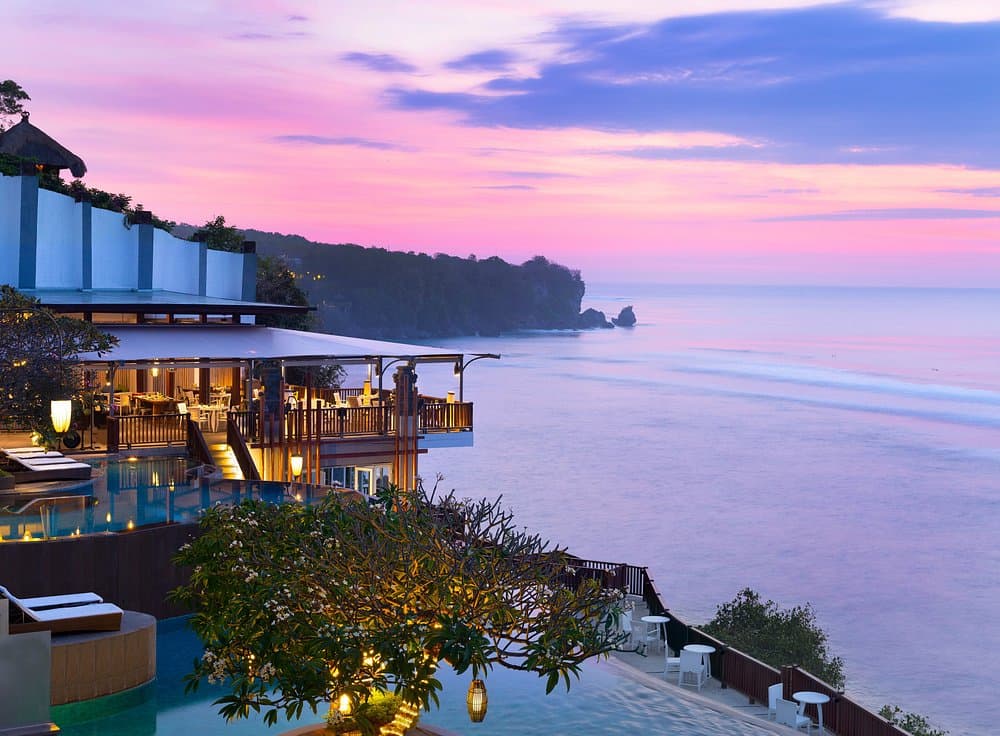
Uluwatu is Bali turned up to eleven — dramatic cliffs, world-class surf, hidden beach coves, and the most theatrical sunset on the island.
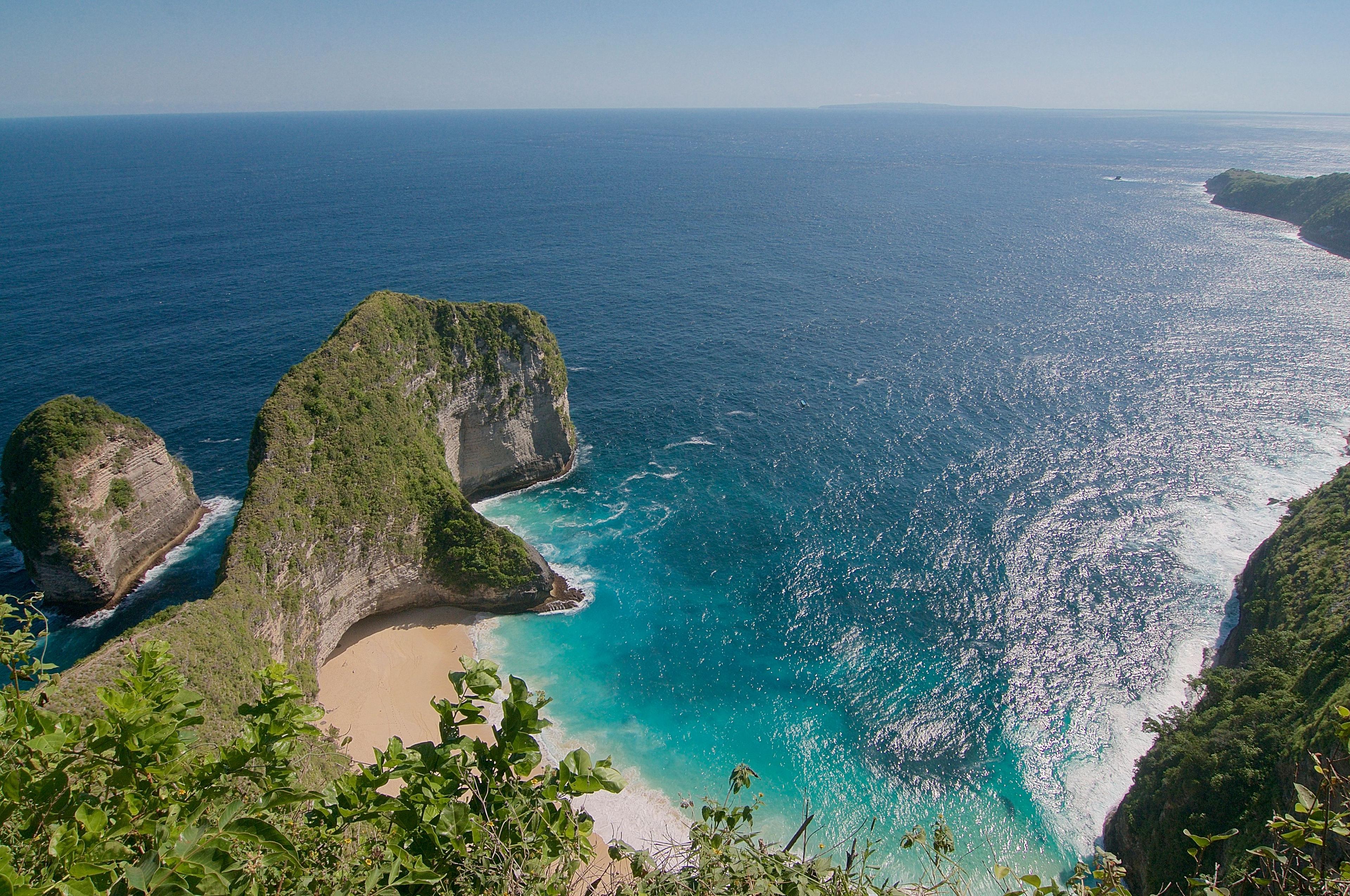
Uluwatu is on the Bukit Peninsula — the southern tip of Bali, about 30–40 minutes from the airport. It feels more remote than either Ubud or Seminyak, and that is entirely the point. The landscape here is different: limestone cliffs drop 70 metres straight into the Indian Ocean, and the beaches — Padang Padang, Bingin, Balangan — are reached by steep stairways cut into the rock.
The Pura Luhur Uluwatu temple sits on the very edge of one of these cliffs, 70 metres above the water. At sunset, the Kecak fire dance performed here — with the actual ocean as the backdrop — is one of the most extraordinary performances you will see anywhere in Asia. Book tickets in advance; the sunset performance sells out.
Uluwatu is where you realise Bali is genuinely beautiful — not just as a backdrop for photos, but as a place that makes you feel something.
Uluwatu is best for: Surfers (Padang Padang and Uluwatu break are world-famous). Couples who want seclusion and drama over nightlife. Travelers on their second or third trip to Bali who want to go beyond the usual circuit. Photographers.
Uluwatu watch-outs: Transport dependency is high — no Grab in most areas, so arrange a private driver for the day (cost: approx ₹2,500–₹3,500 for a full day with waiting). The hidden beaches require a level of fitness (steep stairs, no handrails in places). Accommodation in Uluwatu skews toward luxury villas — mid-range hotel options are fewer than Seminyak or Ubud.
💡 Insider Tip — At Pura Luhur Uluwatu, monkeys will steal anything shiny or loose — sunglasses, phones, hats. Staff at the temple will "negotiate" items back from the monkeys for a small tip, which is part of the theatre, but it is easier to just leave valuables in the car.
Where to Stay — Area Comparison at a Glance
| Ubud | Seminyak | Uluwatu | |
|---|---|---|---|
| Vibe | Spiritual, slow, green | Chic, lively, coastal | Dramatic, clifftop, secluded |
| Best for | Culture, wellness, families | Couples, groups, shoppers | Surfers, photographers, romance |
| Beach access | 1 hr away (Sanur) | Walking distance | Steep stairs, stunning |
| Budget hotel | ₹3,500–₹6,000/night | ₹5,000–₹9,000/night | ₹4,000–₹8,000/night |
| Luxury villa | ₹15,000–₹40,000/night | ₹20,000–₹60,000/night | ₹18,000–₹55,000/night |
| Transport | Grab + private driver | Grab widely available | Private driver essential |
| Food for Indians | Excellent (veg options) | Good (pricey) | Limited, plan ahead |
| Nightlife | Minimal | Strong | Moderate (Single Fin bar) |
The Crafted Vacays Recommendation — Do You Have to Choose?
💡 Insider Tip — For a 6-night Bali trip, the smartest split is 3 nights Ubud + 2 nights Seminyak + 1 night Uluwatu (or base in Seminyak and do Uluwatu as a day trip). This gives you culture, coast, and cliff in one itinerary without feeling rushed.
The honest answer is that most Indian travelers — especially first-timers — do not need to choose just one base. Bali is compact enough that you can stay in two areas and cover the island comfortably. The mistake most DIY planners make is booking all seven nights in one place and then discovering the part of Bali they actually loved was two hours away.
If you are travelling as a family with children: start in Ubud (2–3 nights, temples, rice terraces, Monkey Forest with supervision), then Seminyak (2–3 nights, beach clubs, shopping, easy dining). Uluwatu as a day trip for the Kecak performance at sunset.
If you are on a honeymoon: 2 nights Ubud (the romance of rice field villa at sunrise), 3 nights Seminyak (beach, sunsets, dinner), and 2 nights Uluwatu (private villa with ocean cliff view).
If you are a group of friends: base in Seminyak for the whole trip and do Ubud and Uluwatu as day trips.
📲 Planning a Bali Trip? Let Crafted Vacays build your ideal area split — villa options, private drivers, and restaurant bookings included. Get a free itinerary →
The One Mistake Indian Travelers Keep Making in Bali
They book their accommodation after booking flights, which means they end up in Kuta by default — not because it is the best base, but because it shows up first and looks affordable. Kuta is fine for budget travelers on a party circuit. It is not the Bali that everyone raved about when they came back glowing.
The three areas above — Ubud, Seminyak, Uluwatu — are where that glow comes from. Pick your personality, pick your base, and then let everything else fall into place.
The version of Bali that stays with you long after you leave is the one you found by going slightly off the obvious path.
Crafted Vacays
Travel stories & guides for the modern Indian traveler.