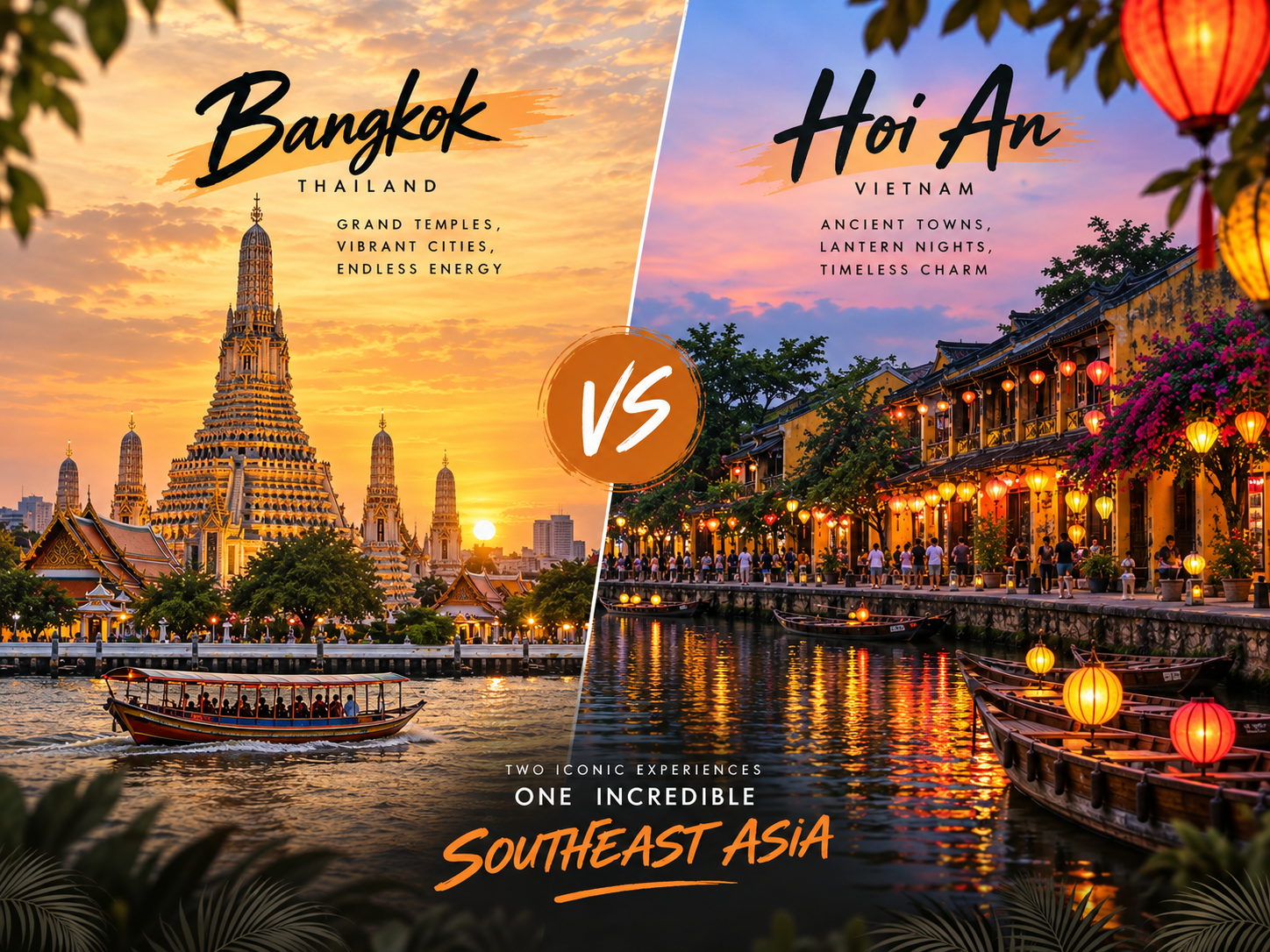
| Head-to-Head | Thailand | Vietnam |
|---|---|---|
| Visa | Visa-free, 60 days | e-Visa required, USD 25, 90 days |
| 6-night budget/person | ₹55,000–₹80,000 | ₹45,000–₹75,000 |
| Beach quality | World-class (Phuket, Krabi) | Good, improving (Da Nang, Phu Quoc) |
| Food | Excellent, spicier, coconut-heavy | Excellent, milder, herb-heavy |
| Nightlife | Extensive | Growing but limited |
| Crowd level | High (mature destination) | Lower (still developing) |
| English proficiency | Good in tourist areas | Improving, patchier outside cities |
Why Travelers Are Switching — The Real Reasons
1. Thailand feels "done."
This is the most common reason cited by repeat Southeast Asia travelers. If you have been to Thailand two or three times, Bangkok's temples, Phuket's beaches, and Pattaya's nightlife start to feel familiar rather than exciting. Vietnam offers a genuinely different landscape, history, and culture within the same flight-time bracket.
2. Value has shifted.
As covered in our Thailand pricing analysis, Thailand has gotten meaningfully pricier over the past decade. Vietnam, still in an earlier stage of tourism development, offers 15-25% lower costs at comparable quality — particularly on hotels and domestic transport.
3. The visa-free vs e-visa trade-off is smaller than people assume.
Thailand's visa-free entry is genuinely more convenient. But Vietnam's e-visa — a 5-minute online form, 3-day processing, USD 25 — is not the deterrent it once was. Most Indian travelers who cite "Thailand is visa-free" as their reason for choosing it have not actually compared the real friction of both processes.
4. History and landscape diversity.
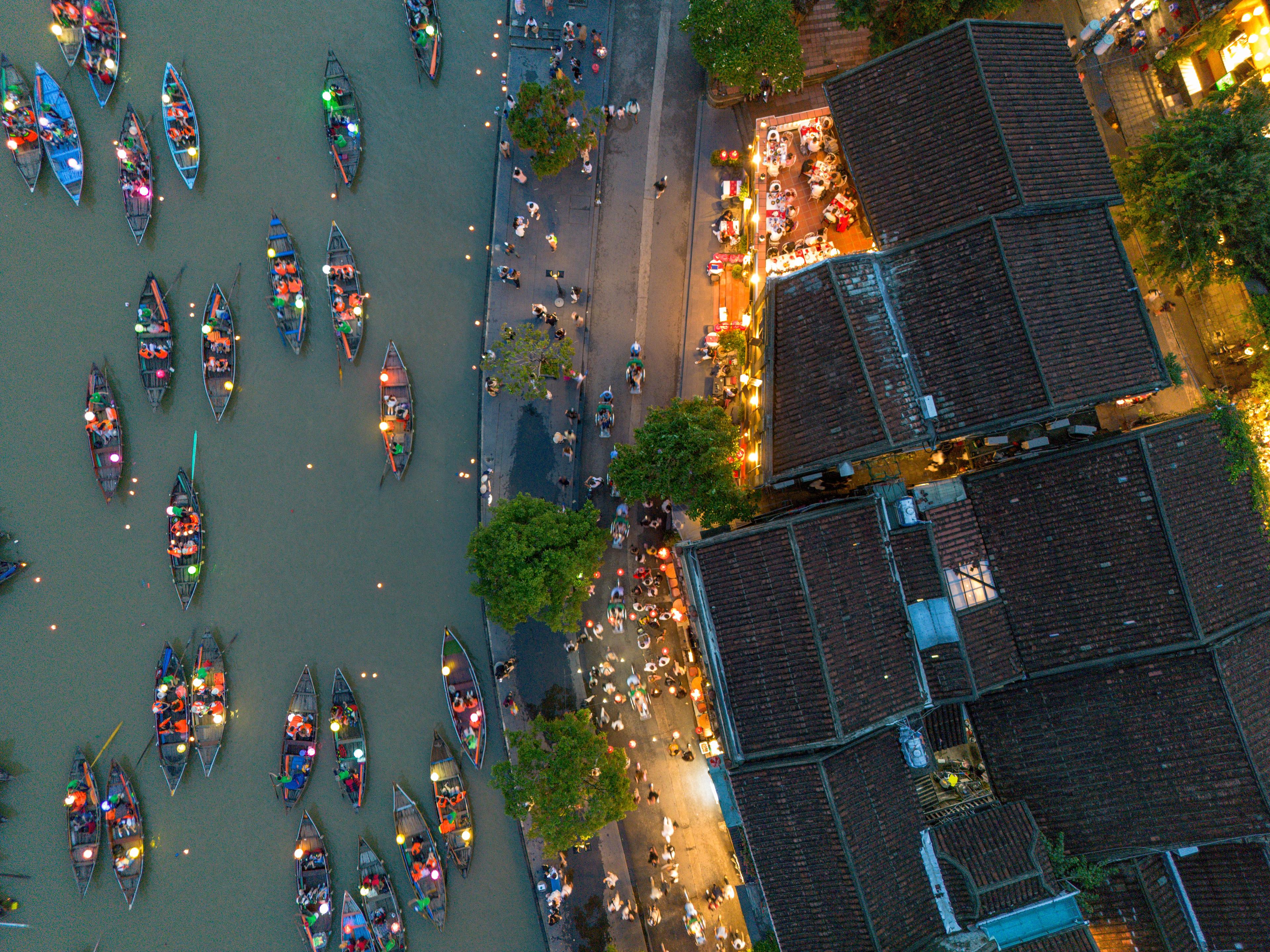
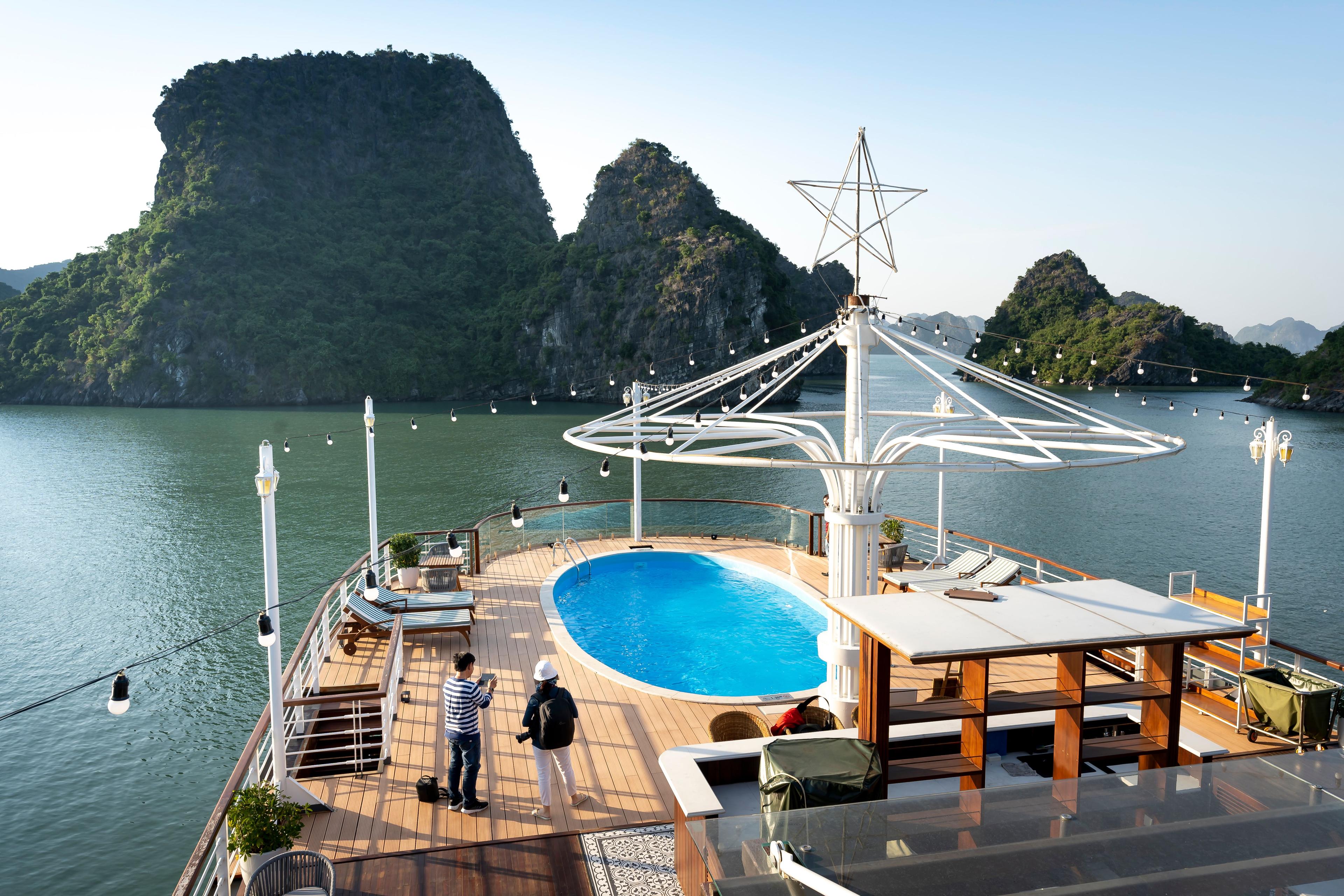
Thailand's landscape, while beautiful, is thematically similar across the country — temples, beaches, jungle. Vietnam offers dramatically different regions within one trip: Hanoi's colonial Old Quarter, Halong Bay's limestone seascape, Hoi An's preserved trading-port architecture, the Mekong Delta's waterways, and Phu Quoc's beaches. The "one country, many countries" feeling is stronger in Vietnam.
5. Food that better matches Indian preferences.
This one surprises people. Thai food, while beloved, leans heavily on fish sauce and coconut milk in ways that occasionally clash with Indian palates raised on different spice profiles. Vietnamese food — pho, fresh spring rolls, banh mi, rice-noodle dishes — is milder, herb-forward, and easier for vegetarians to navigate without constant "no fish sauce" negotiations.
Where Thailand Still Wins Clearly

Phuket's beaches remain some of the best-developed in Southeast Asia — a genuine Thailand advantage.
Being fair to Thailand: it is not being "beaten" by Vietnam in any absolute sense. It remains stronger in several dimensions.
Beach infrastructure. Phuket and Krabi's beach resorts, water sports operators, and island-hopping tour ecosystem are more developed than Vietnam's equivalent (Da Nang, Phu Quoc, Nha Trang) — though Vietnam is closing the gap fast, particularly in Phu Quoc.
Nightlife. Bangkok, Pattaya, and Phuket's nightlife scenes are more extensive and more geared toward international tourists than Vietnam's, where nightlife is concentrated in Ho Chi Minh City and to a lesser extent Hanoi.
Ease of first-time travel. Visa-free entry, widespread English in tourist zones, and a more "figured out" tourism infrastructure make Thailand marginally easier for a first-time international traveler or a large family group with mixed comfort levels.
Direct flight frequency. Thailand has more Indian cities with direct flights and higher frequency than Vietnam, though Vietnam is catching up rapidly (see our Vietnam surge blog for the flight expansion story).
The Traveler Profile for Each
Choose Thailand if: it is your first Southeast Asia trip, you want maximum ease and English-language comfort, beach quality and water sports are the priority, or you are traveling with a large multi-generational family that values familiarity.
Choose Vietnam if: you have done Thailand before and want something different, you are drawn to history and landscape diversity over pure beach relaxation, your food preferences lean toward milder herb-forward flavors, or you want more value per rupee on a similar-length trip.
Neither destination is objectively better. The travelers switching to Vietnam are not discovering Thailand is bad — they are discovering that "Southeast Asia" was never one destination, and Vietnam offers a genuinely different experience that many find more memorable on a second or third regional trip.
Can You Do Both? The Combo Trip
A growing number of Indian travelers are doing exactly this — a combined Thailand-Vietnam trip, usually 10-12 nights, splitting time between Bangkok/Phuket and Hanoi/Halong Bay/Hoi An. Direct flights between Bangkok and Hanoi or Ho Chi Minh City run 1.5-2 hours and cost ₹6,000–₹10,000 — making the combo genuinely feasible for travelers with 10+ days available.
This combo trip is increasingly what Crafted Vacays builds for repeat Southeast Asia travelers who want the "best of both" rather than choosing one over the other.
💡 Insider Tip — If you are doing the combo trip, do Thailand first and Vietnam second. Thailand's more developed tourism infrastructure eases you in; Vietnam's slightly more textured, occasionally chaotic charm lands better as the "adventure" back half of the trip rather than the opening act.
The Data Behind the Shift
Vietnam's 70% YoY growth in Indian arrivals (covered in our dedicated surge blog) versus Thailand's roughly 25-30% YoY growth in the same period tells the real story. Thailand is still growing — it is not losing Indian travelers in absolute terms. But Vietnam is growing from a smaller base at a much faster rate, meaning an increasing share of "new" Southeast Asia trips from India are choosing Vietnam as either a first destination or a Thailand-alternative for repeat travelers.
📲 Can't Decide Between Thailand and Vietnam? Tell Crafted Vacays what you're looking for — beach, culture, budget — and we'll recommend (or combo) the right trip. Get your free itinerary →
The Bottom Line
Vietnam is not replacing Thailand for Indian travelers — it is expanding the map. Thailand remains the easier, more beach-focused, more nightlife-heavy choice. Vietnam offers more landscape and cultural diversity, milder food, and marginally better value, at the cost of slightly more visa friction and a less mature tourism ecosystem. The right choice depends entirely on what kind of Southeast Asia trip you are actually looking for — and increasingly, savvy travelers are stopping trying to choose and doing both.
Thailand taught Indian travelers to love Southeast Asia. Vietnam is teaching them Southeast Asia is bigger than one country.
Crafted Vacays
Travel stories & guides for the modern Indian traveler.